Can I Just Rent a Few Houses and Start an Airbnb Business in Malaysia?
Short answer: you can make money from short-term stays in Malaysia – but “just rent a few houses and list them on Airbnb” is exactly how people get into legal trouble, lose deposits, and kena halau by management.
If you’re thinking of starting an “Airbnb arbitrage” side business (rent long-term from owners, then sublet short-term on Airbnb/Booking.com), you need to understand three layers first:
- Your tenancy agreement and landlord
- The building management (JMB/MC)
- Local council rules, tax and licensing
Let’s break it down in plain language.
The dream vs reality of “Airbnb arbitrage”
The Instagram version:
- You rent a condo at RM2,000/month
- You list it on Airbnb at RM250/night
- 15–18 nights occupancy and you’re “financially free”
Reality in Malaysia:
- Many tenancy agreements expressly ban short-term rental and subletting unless the landlord agrees in writing.
- Many condos have house rules that prohibit Airbnb-style stays.
- Some local councils (e.g. Penang Island) have effectively banned short-term rentals in residential units, unless special conditions are met.
- Tourism tax and income tax still apply, even if “everyone else also never register”.
So if your whole business model is “never tell the landlord, never tell the MC, and hope nobody complains”… that’s not a business, that’s gambling.
Layer 1 – Your tenancy agreement & landlord’s rights
Most proper tenancy agreements in Malaysia will have clauses on:
- Permitted use – usually “residential only”
- No business use / illegal use
- No subletting or short-term rental without written consent
In DIYA’s pro-landlord template, there is even a specific item in Schedule A:
Short Term Rental Policy – Strictly prohibited (e.g. Airbnb, Agoda Homes, Booking.com)
So if you sign something like this, then quietly start doing Airbnb:
- You’re in clear breach of the agreement.
- The landlord can usually terminate the tenancy, re-enter the unit and forfeit your deposits if you default.
- If things get ugly (neighbour complaints, damage, police report), you could be sued for losses.
From the tenant side, our pro-tenant guidebook actually tells tenants not to simply run business or short-term stays without written approval, because it may breach the “permitted use” and subletting clauses.
Bottom line for your “Airbnb business”:
If you don’t have clear written permission from the landlord and agreement terms that actually allow short-term rental, your business can be shut down overnight – and you may lose your capital (deposits, reno, furniture) with zero recourse.
Layer 2 – JMB/MC and condo house rules
Even if your landlord says, “OK lah, you go and do Airbnb,” you’re not home free yet.
For stratified properties (condos, serviced apartments, etc.), the Joint Management Body (JMB) or Management Corporation (MC) can pass by-laws/house rules that:
- Prohibit short-term rentals in residential blocks
- Treat units that operate like “budget hotels” as misuse of the parcel
- Fine owners/tenants who break the rules
In the famous Verve Suites Federal Court case, the court confirmed that an MC can pass a house rule to ban short-term rentals and enforce it against owners/tenants running an Airbnb-style business in a residential development.
So even if your Landlord says yes, AND your tenancy agreement is silent or “OK” with Airbnb
… the building management can still say NO, issue warnings, fines, or bar guests from entering.
This is very common in:
- Family-oriented condos
- Older apartments where residents dislike “hotel-style” turnover
- Buildings that have had security or noise issues from short-stay guests
If your business model ignores the MC/JMB, you’re basically hoping they never read their own house rules.
Layer 3 – Local council rules & national licensing (coming)
At the local council level, things are tightening:
- The Penang Island City Council (MBPP) has issued guidelines that effectively ban short-term rentals in residential strata units, unless strict conditions are met (e.g. certain commercial categories).
- DBKL has long said that management bodies can restrict Airbnb by passing by-laws, and short-term rental activities must comply with zoning and licensing rules.
- There is a national licensing framework for short-term rentals being discussed, with ideas like limiting STR to a certain number of days per year and requiring all operators to register with their local councils.
Many people still operate “in the grey area”, but for someone starting a proper business, you should plan for:
- Business registration (SSM)
- Any required council licenses for short-term accommodation
- Compliance with fire safety / building codes
Because once licensing becomes compulsory and enforcement increases, the “I didn’t know” excuse won’t help.
Taxes that you can’t pretend don’t exist
If you’re collecting money from guests, you’re not just “helping the landlord pay his loan”. You’re running a business.
Things to know:
- Tourism Tax (TTx) – flat RM10 per room per night charged to foreign guests in registered accommodation. Malaysians and PRs are exempt. Operators must collect and remit this tax to Customs.
- Airbnb already collects tourism tax and service tax on its own service fees, but that doesn’t remove your own tax obligations as an operator.
- Income tax – your profit from hosting (after expenses) is taxable income.
- Service tax / SST – may be relevant for larger operators above certain thresholds. Airbnb’s own tax guide for Malaysia highlights income tax and service tax as key areas to understand.
This doesn’t mean Airbnb business is not worth doing – it just means you should cost these in properly instead of assuming “everything is net profit”.
What happens if you “just do first”?
Here’s what we see often in disputes:
- Tenant signs a normal residential tenancy, no mention of Airbnb, no landlord consent.
- Tenant quietly lists the unit on multiple platforms.
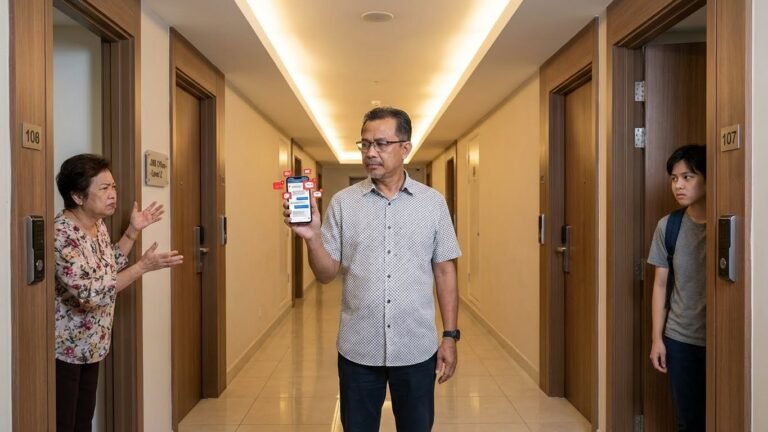
- Guests start coming in with suitcases at 2am, getting lost at the lift lobby, buzzing security every weekend.
- JMB issues warning letters to the owner (not you).
- Owner confronts the tenant, realises this is a short-stay business.
- Owner issues notice of breach, forfeits deposits, and kicks tenant out.
Sometimes:
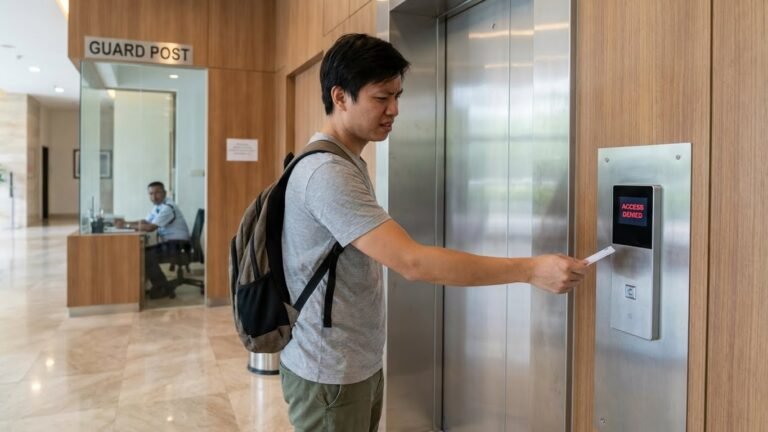
- MC disables access cards for guests
- Neighbours call the council or police
- Your listing gets suspended after complaints
If you’ve poured RM20–30k into furniture, reno and branding, one “get out now” notice can wipe you out.
From the landlord perspective, this is exactly why our pro-landlord tenancy template has:
- Clear permitted use and
- A dedicated line in Schedule A – Short Term Rental Policy, defaulting to “strictly prohibited”, unless the landlord intentionally allows it and edits that part.
How to start an Airbnb / short-stay business the right way
If you’re serious (not just “try and see”), here’s a more realistic roadmap:
Step 1 – Choose the right type of property
- Prefer service apartments / commercial-titled units or buildings that are openly Airbnb-friendly.
- Avoid condos where management has already publicly fought against short-term rentals.
Always ask management directly:
“Are short-term stays (below 30 days) allowed in this block? Any conditions?”
If they hesitate, or say “officially no, but some people still do”… treat that as a yellow/red flag.
Step 2 – Be transparent with landlords
Instead of hiding your plan, pitch it as a partnership:
- You handle marketing, guest communication and cleaning.
- Landlord gets stable rent and less hassle.
- You absorb operational risk.
But then you MUST:
- Get written consent for short-term stays
- Make sure subletting/short-term rental is expressly allowed in the tenancy agreement
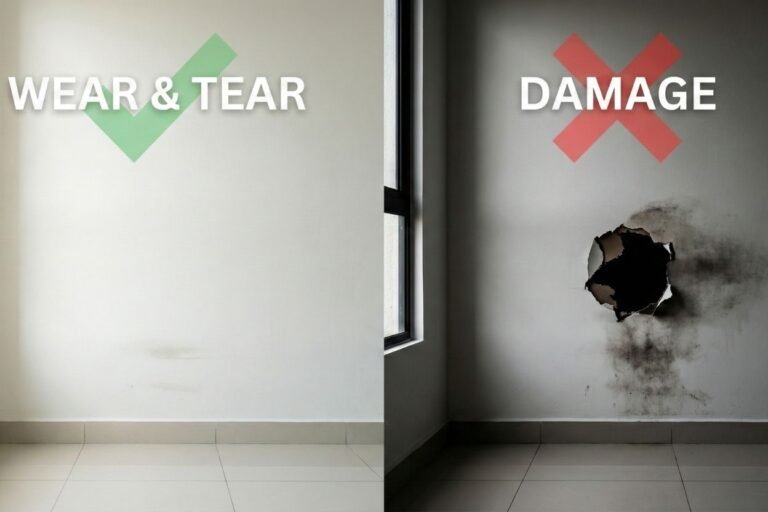
- Clarify who pays what (wear & tear, extra cleaning, neighbour complaints, fines etc.)
Step 3 – Use a tenancy agreement that actually fits the business
This is where a generic “one-page sample from Google” is not enough.
You want an agreement that:
- States short-term rental is allowed in the “Permitted Use” and Short Term Rental Policy sections (instead of default “strictly prohibited”).
- Allocates responsibilities clearly:
- Who handles guest damage?
- Who deals with management if there’s a complaint?
- Are you allowed to change locks, add keyboxes, install CCTV outside the unit entrance?
- Covers maintenance, utilities, inspections, and early termination in a way that reflects business use, not just normal “family staying there quietly” use.
That’s exactly where our DIYA tenancy packs are designed to help:
- Role-specific templates (Pro-Landlord and Pro-Tenant) so each side understands their own protections.
- Bilingual (English + BM) agreements with a Short Term Rental Policy field in Schedule A that you can customise together.
- Practical guidebooks for both landlords and tenants that explain things like permitted use, subletting, inspections and default in plain language, not legal jargon.
We’re not giving you legal advice – but we are giving you a clearer starting point so both sides know what they’re signing.
Step 4 – Treat it as a real business
At minimum:
- Register your business (SSM).
- Track your income and expenses for tax.
- Understand the tourism tax rules for foreign guests and how platforms like Airbnb handle it vs what you still need to do.
- Build proper SOPs for cleaning, key handover, guest screening and emergency response.
If you do this properly, you’re building something that can scale beyond “one lucky unit”. If you don’t, one angry neighbour or one strict MC can end your “business” faster than any market downturn.
So… can you “just rent a few houses and start an Airbnb business”?
If by “just” you mean:
“Sign standard residential tenancy, hide from landlord, ignore MC rules, don’t think about tax or licences…”
Then no – that’s risky, unsustainable, and frankly, a bad plan.
If you mean:
“Carefully choose properties that allow short-term stays, get landlords’ written consent, use a proper agreement that spells out Airbnb use, and run everything like a compliant business…”
Then yes – it can be a viable business model, but it starts with paperwork and permissions, not just pretty photos on Airbnb.
If you’re a landlord or tenant thinking about allowing / running short-term stays, this is exactly where a clear, bilingual tenancy agreement helps:
You can use our DIYA tenancy agreement packs to spell out:
- Whether short-term rentals are allowed
- Under what conditions
- And what happens if either side breaks the rules
So you’re not just chasing bookings – you’re building a business that can actually survive when the rules get stricter.
This article is for general educational purposes only and is not legal advice.