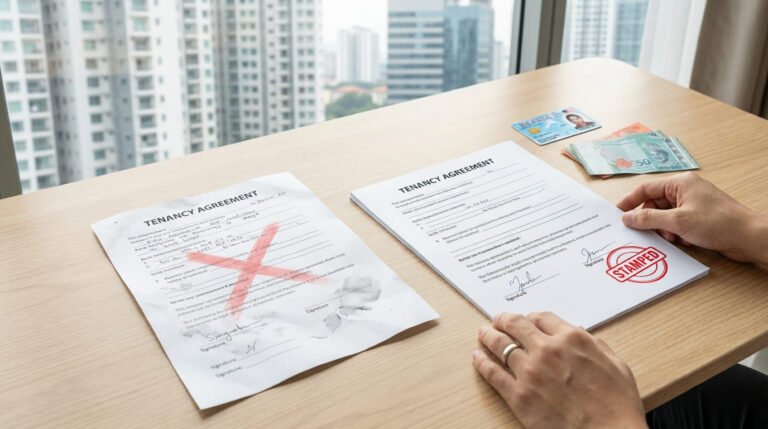
The WhatsApp Trap: Why “Trust Me Bro” Isn’t a Tenancy Agreement
We’ve all heard it before. You have an empty unit. Your cousin (or colleague, or old college friend) needs a place to stay.
“Eh bro, just rent to me lah. We know each other what. No need so formal.”
It sounds great. You trust them. They trust you. You agree on a price via WhatsApp, they transfer the deposit, and you hand over the keys. You’ve just saved money on a lawyer and hassle, right?
Wrong.
In Malaysia, we call this the “Janji Melayu” trap (or just the “Janji” trap). It’s the cultural habit of relying on verbal promises because we don’t want to “spoil the relationship” with paperwork. But ironically, nothing destroys a friendship faster than a rental dispute without a written contract.
Here is why your WhatsApp chat history won’t save you—and why a DIY agreement is actually the best way to protect your friendship.
1. WhatsApp Can’t Calculate “Late Payment Interest”
When a stranger pays rent late, you send a formal reminder. When your friend pays late, it’s awkward.
“Bro, sorry ah, car broke down. Pay you next week?”
Next week becomes next month. You don’t want to be the bad guy nagging for money.
The Fix: A professional tenancy agreement does the “bad guy” work for you. Our DIYa Pro Landlord Agreement clearly states that late rent attracts interest (standardized at 12% per annum in the Landlord template , or 6% in the Tenant template ).
When you sign this upfront, your friend knows strict rules exist before they move in. It changes the dynamic from “I owe my friend money” to “I have a contractual obligation.”
2. The “Fair Wear and Tear” Argument
Six months later, they move out. The walls are scuffed, and the curtains smell like cigarette smoke.
- You say: “I need to deduct RM500 for cleaning and repainting.”
- They say: “Eh, that was already there! Plus, we’re friends, why so calculated?”
Without a written inventory list signed at the start, it is your word against theirs. WhatsApp photos disappear or get buried in chat history.
The Fix: Section 11 of our agreement ties specifically to Schedule B: Inventory List. It forces both parties to inspect the house together before handover. If they sign off that the curtains were clean, they can’t argue later.
3. The “Ghosting” Nightmare
What happens if your tenant disappears? They stop replying to texts, change the locks, or leave the house empty for weeks. In a casual arrangement, you might be terrified to enter your own property for fear of trespassing laws.
The Fix: A proper agreement defines “Abandonment.” Under Section 18.1(c) of our template, if the premises are left unoccupied for more than 30 days without notice, it is considered a Default. This gives you clear legal grounds to terminate the agreement and recover your property without guessing games.
4. The “Privacy” Boundary
This goes both ways. If you are the tenant renting from an uncle, you don’t want him using his spare key to walk in whenever he likes “just to check on the house.”
The Fix: Section 7 prevents this. The Landlord must give at least 12 to 48 hours’ notice (depending on the template selected) before entering. This clause turns a “busybody relative” into a “respectful landlord.”
The Bottom Line
You don’t need to hire an expensive lawyer to rent to a friend. But you do need more than a handshake.
Using a DIY Agreement pack isn’t about mistrust; it’s about clarity. It sets the rules while everyone is still happy, so if things go wrong, the paper handles the mess—not your friendship.
Don’t rely on screenshots. Get it in writing. Check out our bilingual Pro Landlord and Pro Tenant packs at DIYagreement.com.