What Happens If a Tenant Passes Away During Tenancy in Malaysia?
It’s a situation no one expects to face, yet it does happen — a tenant passes away suddenly while still bound by a tenancy agreement. When it happens, many landlords and family members are unsure what the correct procedure is, what happens to the contract, and how to manage the tenant’s belongings.
Below is a clear, fact-checked explanation of how this situation is handled under Malaysian contract principles, probate laws, and common building management practices.
1. The tenancy does not automatically end
A tenancy agreement is a legally binding contract. Under Malaysian law, when a contracting party passes away, their estate (through an executor or administrator) takes over their rights and obligations unless the contract is considered a personal service contract but a tenancy is not.
This means:
The tenancy technically continues until it is formally terminated, and rent still accrues during this period.
2. Only the estate’s legal representative has authority over the unit
Family members cannot simply enter the property and make decisions.
Under probate rules, only:
- the executor (if the deceased left a will), or
- the administrator (if there is no will, appointed later through a court process)
has the legal authority to:
- access the rental unit
- retrieve belongings
- settle outstanding rent or utilities
- sign a mutual termination
- communicate officially with the landlord
Until someone is formally identified as the representative, the landlord should not release possession of the unit or its contents.
3. The landlord cannot remove or dispose of belongings
The tenant’s possessions are part of the estate.
Removing them without proper authority may expose the landlord to legal claims later.
The landlord must NOT:
- clear the room
- throw away items
- give belongings to others
- immediately re-rent the unit
What the landlord can do is secure the unit to prevent theft or damage, but belongings must remain untouched.
4. What the landlord should do (proper procedure)
Step 1 — Request documentation
From the family or representative:
- Death certificate
- Identification
- Executor or administrator appointment (if available)
In many cases, the appointment is not ready yet — probate takes time — so landlords may proceed to Step 2.
Step 2 — Secure the unit
Changing the lock for safety is allowed as long as belongings are not removed.
Access must be granted once the representative is confirmed.
Step 3 — Inventory the belongings
Create a simple list or take photos to ensure transparency.
This helps prevent future disputes.
Step 4 — Discuss termination
Most estates prefer early termination rather than continuing the rental.
Landlords and the estate can sign a mutual termination agreement and set a reasonable timeline for collecting belongings.
5. Rent liability — can the landlord claim rent from the estate?
Legally:
Yes. The estate is responsible for obligations up to the date of formal termination.
Practically:
Most landlords in Malaysia choose a more compassionate approach by:
- waiving rent from the date of death, or
- charging only up to the date of belongings removal, or
- deducting only essential costs from the deposit
Pursuing rent through probate can be time-consuming and rarely worth the effort.
6. Deposit handling
Landlords may deduct for:
- outstanding rent up to termination
- unpaid utilities (once final bills arrive)
- cleaning costs
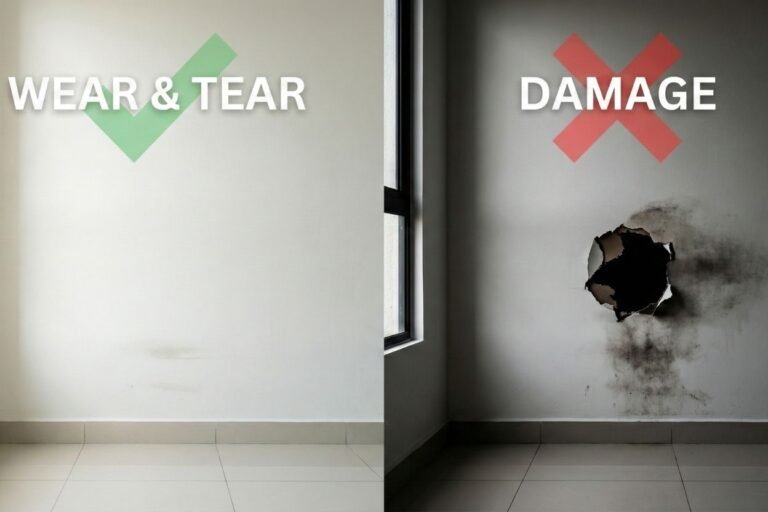
- damage beyond fair wear and tear
A clear itemised statement should be provided to the estate.
7. What if no next-of-kin comes forward?
If weeks or months pass without any response:
- Make a police report. This creates an official record that the tenant has passed away and the estate is uncontactable.
- Police or JMB may guide the landlord on next steps.
- Landlord should document all belongings before disposal or removal.
- After “reasonable attempts” to locate family, the landlord may clear the unit, but must keep records to protect against future claims.
8. The role of JMB/MC in strata properties
Most JMB/MCs require:
- death certificate
- landlord authorisation
- ID of representative
- notification of move-out date
- standard moving-out form
Some managements will refuse to release access cards unless the landlord confirms the representative in writing.
This step ensures security and prevents unauthorised entry.
9. Communication and compassion matter
While the law provides structure, these situations involve real families dealing with loss.
Clear communication, transparency, and a humane approach go a long way.
For landlords, a respectful process reduces the likelihood of disputes and protects your long-term reputation.
For family members, understanding the correct procedures helps avoid unnecessary stress during an already difficult time.
Last but not least, if you want a tenancy agreement that’s clear, practical, and designed for real Malaysian situations, our DIYA Tenancy Agreement Packs are available in two versions: Pro Landlord and Pro Tenant. Each pack includes bilingual agreements (English + BM) and an easy-to-understand guidebook to help you stay protected and informed. Click on the links to learn more.