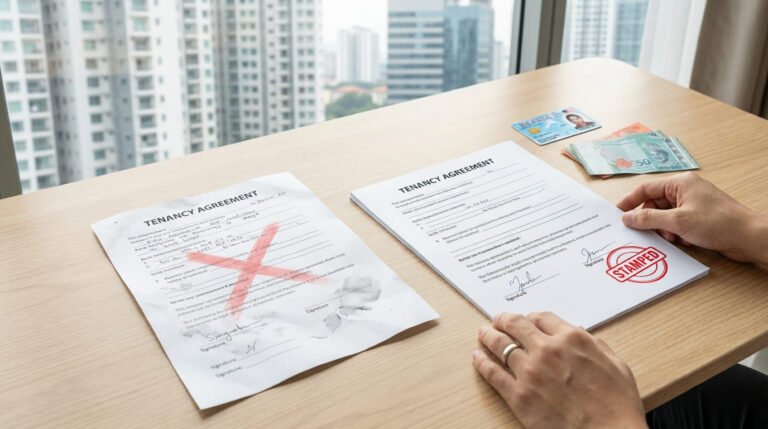
Malaysia Guide: What Happens When You Continue Renting After the Tenancy Expires without signing a New Agreement?
In Malaysia, this situation is extremely common. The tenancy agreement expires, but both landlord and tenant casually agree to “Ok la, we can just continue renting.” The tenant stays on, the landlord keeps collecting rent, and because both sides already know each other, no one feels it’s necessary to sign a new contract. Everything seems smooth, friendly, and uncomplicated.
But from a legal and practical point of view, things are no longer the same. Once the agreement reaches its expiry date, the old contract stops protecting both sides—even if everyone verbally agrees to carry on. And when issues arise later, such as rent adjustments, notice periods, repairs, or deposit disputes, both landlords and tenants often realise too late that the informal “just continue” arrangement has very different consequences than they expected.
This guide explains, in clear and practical Malaysian terms, what actually happens when a tenancy expires but both sides continue the arrangement without signing a new agreement.
1. When the tenancy expires, the fixed-term agreement stops applying
A tenancy agreement is a contract with a clearly defined start date and end date. When the expiry date arrives, the contract is considered “fully performed” and no longer binds the parties in the same way.
This means that all the protections inside the agreement do not automatically roll over. The clauses on deposits, inspection, repairs, rent, and notice periods were written for the fixed-term period only.
After expiry:
- The old contract cannot be enforced as-is.
- The old rent amount is not legally protected.
- The old notice period no longer applies.
- The old rules on repairs and responsibilities are no longer guaranteed.
- Renewal terms become irrelevant if no renewal is executed.
What you have now is no longer a fixed tenancy. It becomes something else.
2. Accepting rent after expiry creates a month-to-month tenancy
If the tenant continues staying and the landlord continues accepting rental payments, the law generally treats this as a “periodic tenancy” or month-to-month arrangement.
This type of tenancy:
- Is recognised based on behaviour, not a written contract.
- Renews automatically every month.
- Can be ended by either party with reasonable notice (typically one month).
- Uses the old agreement only as a reference, not as a binding document.
It is not an extension of the old tenancy. It is a new, informal tenancy created through conduct.
Many Malaysians assume that since rent is still being paid, “the agreement is still valid.” It isn’t. What is still valid is the landlord–tenant relationship, not the original contract.
3. So, can the landlord increase rent anytime?
This is the most common question, and for good reason. Without a renewed contract, the rent is no longer locked in. The landlord is not bound by the previous rate because the contract that fixed that rate has already expired.
But that doesn’t mean a landlord can suddenly announce, “Starting tomorrow, rental naik RM500.”
In practice, the standard expectation in Malaysia is that any rent revision must come with reasonable notice. Since the arrangement is month-to-month, a typical and fair approach is to give one rental cycle of notice. For example, informing the tenant that the rent will adjust the following month.
This gives the tenant a choice:
- Accept the new rent,
- Negotiate,
- Or decide to move out.
Both sides still have rights. But neither side has the stability that comes with a proper written agreement.
4. What if the tenant refuses the new rent?
If the tenant doesn’t agree to the new rate, the landlord cannot force them to pay more. What the landlord can do is give a notice to end the month-to-month arrangement.
Meanwhile, the tenant can:
- Negotiate for a middle ground,
- Request more time,
- Or prepare to move out.
A common mistake is when tenants assume the landlord “must continue with the old rent.” That is true only if there is a valid fixed-term contract. Once the contract ends, the rent amount is no longer regulated by the expired agreement.
Similarly, some landlords assume they can impose any increase at any moment. That also isn’t correct. A month-to-month tenancy still requires fair notice before changes are made.
This is why the “just continue lah” approach often leads to misunderstandings and arguments.
5. Why this arrangement is risky for landlords
Landlords often allow tenants to continue without signing anything because it feels easy. No need to prepare documents. No need to pay stamping fees. No need to renegotiate terms.
However, this convenience comes with disadvantages.
When no fresh agreement is in place:
- Rent is not protected against disputes.
- Deposit deductions become harder to justify.
- Tenant obligations are no longer clearly enforceable.
- Handling damage or repairs becomes uncertain.
- It becomes harder to request inspections.
- Ending the tenancy requires proper notice rather than relying on fixed-term expiry.
Some landlords only realise the risk when things go wrong. A tenant refuses to leave. A tenant causes damage. A tenant leaves without paying the last month’s bills. Without a current agreement, enforcement becomes a lot more difficult.
6. Why this arrangement is risky for tenants
Tenants may also feel comfortable continuing without signing anything new. They assume that as long as they keep paying rent, nothing changes.
But from the tenant’s perspective, not having a current agreement also creates vulnerabilities.
Without a renewed agreement:
- Rent can be revised at any time with notice.
- The landlord can decide to end the tenancy at any time.
- There is no guaranteed duration of stay.
- Repair and maintenance responsibilities may become unclear.
- The landlord can decide not to renew and ask you to vacate with short notice.
This matters especially for families with children, housemates sharing costs, or long-term renters who need stability.
7. The best solution: renew with a simple written agreement
The easiest way to avoid ambiguity is simply to renew the tenancy in writing.
This doesn’t have to be complicated or expensive. There are two common approaches for Malaysians:
Option A: Full renewal with stamping
Best for long-term peace of mind.
This gives both sides clear, enforceable terms for rent, notice periods, inspections, repairs, and deposit handling.
Option B: Budget-friendly renewal
If both sides want to save cost, you can simply reuse the previous agreement. Print it out, update the dates, and sign it again. Even without stamping, this already provides a reasonable level of clarity and protection for everyday situations because both sides now have a written document they agreed to.
Stamping is still recommended to make the agreement fully enforceable if a dispute ever goes to the authorities. But even an unstamped signed agreement is significantly better than having no agreement at all.
This is why many landlords and tenants prefer using editable templates like those in DIYA’s tenancy packs. They can renew quickly, clearly, and affordably without starting from scratch.
8. Conclusion: Continuing is possible, but clarity is better
There is nothing illegal about continuing to rent after a tenancy expires and continuing without signing anything new. It simply becomes a month-to-month arrangement based on conduct.
But without a proper written agreement, both landlords and tenants face uncertainties. Rent can change. Notice periods can be disputed. Responsibilities become unclear. And deposit issues become harder to resolve.
A simple written renewal protects both sides. It avoids misunderstandings, gives predictability, and keeps the rental relationship smooth. Whether you choose a fully stamped renewal or a quick printed agreement, having something in writing is always better than relying on assumptions.
Last but not least, checkout our role specific tenancy agreement that protects you, whether you are landlord or tenant.