Parking Wars: 5 Nightmares Every Malaysian Tenant Faces (And How to Avoid Them)
We often focus on the unit itself—the view, the kitchen, the water pressure. But for many Malaysian renters, the real drama starts the moment they drive past the guardhouse.
Parking in high-rise condos and apartments can be a battlefield. From fighting for your designated bay to finding your car clamped because you missed a memo, parking disputes are one of the most common causes of friction between tenants, landlords, and building management.
Here are the 5 most common parking nightmares tenants encounter, and how a solid tenancy agreement protects you from them.
1. The “Wait, Which Lot is Mine?” Confusion
The Scenario: You move in, and the agent vaguely points to a row of cars: “I think it’s somewhere there, level 3A.” You park in what you think is your spot, only to find an angry note (or a clamp) on your windscreen the next morning because you accidentally took a neighbor’s bay.
The Fix: Never rely on a verbal “agak-agak” (estimation). A proper tenancy agreement explicitly lists the exact parking bay number in the schedule.
Why it matters: It gives you the exclusive legal right to that specific spot. If someone else takes it, you have the paperwork to complain to management.
2. The “Clamped Car” Panic
The Scenario: You park perfectly in your bay, but you didn’t display the latest building sticker. Or maybe your friend came over and parked in the visitor lot too long. The management clamps your car and demands a RM100 fine. You call your landlord to pay it, but they refuse.
The Fix: Most standard agreements state clearly that the tenant must comply with all building management rules regarding parking.
The Reality Check: If you get fined or towed because you didn’t follow the condo rules (like displaying a decal), the landlord is not responsible for the penalty. It’s on you to know the rules.
3. The “Mystery Dent” (Liability Issues)
The Scenario: You wake up to find a deep scratch on your car door, or worse—a window smashed and your Touch ‘n Go card stolen while parked in your secure resident lot. You feel the landlord should compensate you because, technically, you’re paying for a “safe” parking spot.
The Fix: This is a hard pill to swallow, but standard tenancy agreements usually include a clause stating the landlord is not liable for loss or damage to your vehicle or its contents.
The Exception: The only time a landlord might be liable is if the damage was caused by their direct negligence (e.g., their crumbling ceiling fell on your car). Otherwise, this is an insurance issue, not a landlord issue.
4. Using the Parking Lot as a “Storeroom”
The Scenario: You have too many boxes, an old bicycle, or a spare set of tires that won’t fit in the unit. You figure, “I have two parking spots but only one car, I’ll just pile my stuff in the second bay.” Next thing you know, management is issuing a warning letter.
The Fix: Tenancy agreements specify “Permitted Use.” Usually, the parking space is strictly for private motor vehicles only.
The Rule: You generally cannot use the space for storage, repair work, or commercial purposes. It keeps the car park tidy and prevents fire hazards.
5. The “Lost Card” Drama
The Scenario: You lose your access card or parking transponder. You ask the landlord for a replacement, but they say you have to pay the RM50 replacement fee plus an admin fee.
The Fix: At the start of the tenancy, you should receive all necessary access cards. However, safeguarding them is your responsibility.
The End Game: When you move out, you must return all cards and keys provided. If you lost one, the cost comes out of your pocket (or your deposit).
Why DIY Agreement Packs Are a Life-Saver
Most parking disputes happen because the rules were never written down.
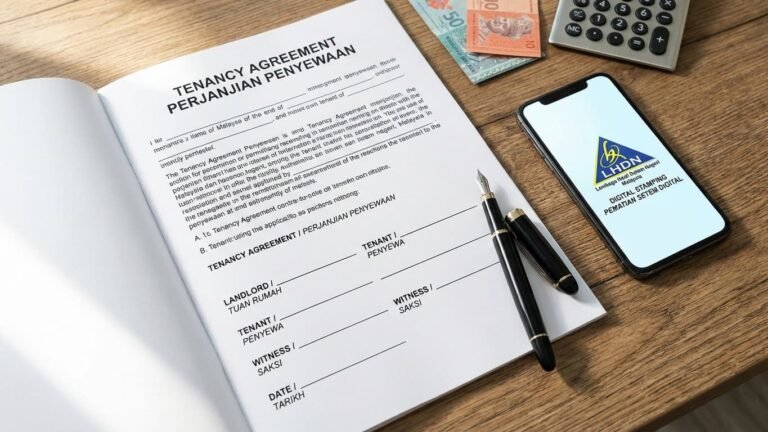
Our DIY Agreement Tenancy Packs include a dedicated section just for Parking Space (Section 12). We don’t just leave it blank; we prompt you to fill in the exact parking lot number and clearly explain who is responsible for fines and damages.
Whether you are a tenant wanting to secure your spot or a landlord wanting to avoid management complaints, our bilingual agreements (English & Malay) ensure everyone knows exactly where they stand—and where they park.