A guide for Malaysian tenants: 11 Hidden Things to Check Before Renting
Finding a rental in Malaysia usually follows a standard script: scroll through property portals, check if the rent fits your budget, and ask “is it near the LRT?” But seasoned renters know that the real problems often don’t show up in the listing photos.
Regret usually sets in three months later—when you realize your porch floods every time it rains, your bedroom wall heats up like an oven, or the drive up to your parking lot makes you dizzy.
Before you commit to a year-long contract, use this Ultimate Checklist to spot the red flags that most tenants miss.
Part 1: The “Hardware” Stress Tests
Don’t just look at the house—test it.
1. The “Rain & Drain” Test
Most viewings happen on sunny weekends. But in Malaysia, the weather is your biggest stress-tester. If possible, visit the area during or immediately after a heavy downpour.
- Look for: Stagnant water in the porch or drains (a dengue risk), watermarks on the ceiling, and if the main access road to the taman or condo floods.
- Why it matters: Your tenancy agreement typically covers structural repairs, but spotting a leak before you move in saves you the hassle of coordinating repairs later.
2. The “Pressure & Power” Check
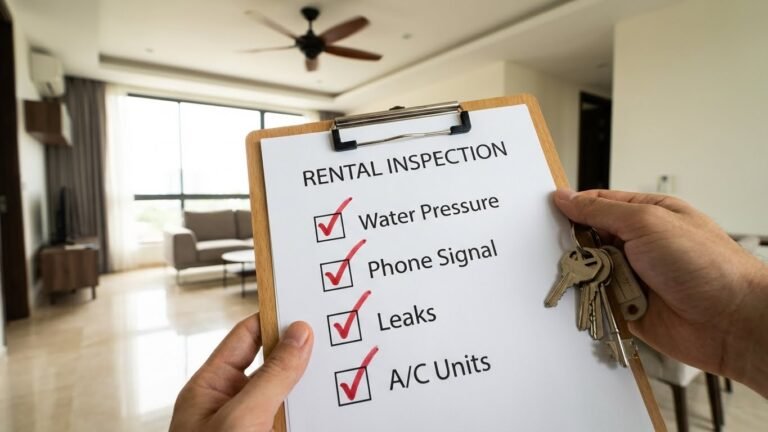
Don’t just admire the fixtures; use them. Our Tenant Guidebook advises tenants to “test lights, taps, and appliances” on move-in day, but you should do this during the viewing too.
- The Tip: Turn on the shower and flush the toilet simultaneously to check the water pressure. Bring a phone charger to test the wall sockets.
- Why it matters: Low water pressure makes mornings miserable, and loose sockets are a safety hazard.
3. The “Afternoon Sauna” (West Sun Test)
Check the compass direction of the master bedroom and living room windows. If they face West, make sure you visit the unit around 3:00 PM.
- The Tip: Feel the walls. Are they radiating heat?
- Why it matters: In Malaysia, the “West Sun” heats up walls like an oven. A hot unit forces you to run the air-conditioning longer and harder, which spikes your electricity bill—a cost you, not the landlord, have to pay.
Part 2: Connectivity & Access
Can you actually live and work here?
4. The “Digital Connectivity” Audit
Never assume the internet will work just because the agent says “UniFi ready.”
- The Tip: Check the signal bars on your own phone in every room—especially the master bedroom and the bathroom (dead zones are common in high-rises).
- Why it matters: If you work from home, a dead zone is a dealbreaker.
5. The “Telco Contract” Check
- The Tip: Ask if the building is tied exclusively to one provider (e.g., “Time only”) or if the port quota is full.
- Why it matters: In older condos, fibre ports can run out, leaving you on a waiting list. You are responsible for your own internet subscription, so make sure you can actually get one!
6. The “Peak Hour” Reality Check
Listing agents love to say “easy access to highway.” But easy access at 11:00 AM on a Sunday is very different from 6:00 PM on a Tuesday.
- The Tip: Do a test drive to the unit during rush hour to see if the access road becomes a bottleneck.
- Why it matters: You don’t want to spend 20 minutes just waiting to turn into your own guardhouse.
7. The “Parking Spiral” Drive
- The Tip: Don’t just ask where your parking lot is—ask to drive up to it.
- Why it matters: In some high-density condos, your assigned lot might be on “Level 8A,” requiring a dizzying 10-minute drive in circles every single day. Also, check if the ramps are too narrow for your car. The agreement confirms your right to use a specific bay, but it doesn’t guarantee convenience!
Part 3: The “Livability” Scan
Visuals can be staged. Smells and sounds cannot.
8. The “Nose & Ear” Walk
- The Tip: Open the windows and stand silently for two minutes. Sniff the air near the wet kitchen or yard.
- Why it matters: You are checking for noise pollution (highway hum, nearby schools, religious calls) and smells (dampness, neighbor’s cooking, or drains). Tenants have a right to “quiet enjoyment”, but it’s better to pick a naturally quiet unit first.
9. The “Trash Walk” Inspection
- The Tip: Find the “Refuse Room” (Bilik Sampah) on your floor. Is it right next to your unit’s front door?
- Why it matters: If the door seal isn’t tight, you might smell rotting food or deal with pests entering your unit. While you must keep your unit clean, you can’t control the building’s common areas.
10. The “Guard House” Intel
The agent wants to close the deal, but the security guard has no reason to lie.
- The Tip: Make small talk while waiting at the lobby. Ask: “Does the lift break down often?” or “Is the water supply stable?”
- Why it matters: Frequent lift breakdowns in a 30-storey building are a nightmare you want to avoid.
11. The “Lobby Notice Board” Scan
- The Tip: Stop by the management office or mail room notice board and read the announcements.
- Why it matters: Look for notices about “Frequent Water Disruptions” or warnings about break-ins. This gives you a snapshot of how well the building is managed. Remember, as a tenant, you are bound by these building rules too.
The Final Step: Secure It in Writing
Once you’ve found a unit that passes this 11-point test, the next step is securing it with a fair contract.
Physical defects are one thing, but legal loopholes are another. A good tenancy agreement ensures that if hidden issues do pop up later (like a sudden roof leak or electrical failure), the landlord’s obligation to fix them is clearly written down.
Don’t leave your tenancy to chance. Get our Pro Tenant Agreement Pack today. It includes a bilingual agreement and a comprehensive guidebook to help you inspect, sign, and rent with total confidence.