The True Cost of Renting Out Your Property in Malaysia (And How to Budget for It)
We often hear that property investment is the key to “passive income.” The dream is simple: you buy a unit, find a tenant, and watch the rent roll in. However, the reality is often more complex.
Before that first month’s rental payment hits your bank account, there is a significant upfront investment required to get your unit market-ready. Whether you are a first-time landlord in Subang Jaya or a seasoned investor in Penang, understanding these costs is crucial to protecting your profit margin. If you don’t budget for the “hidden” costs of renting, you might find your first year’s profit completely wiped out.
The Fixed Costs: Non-Negotiables
The first major hurdle in your budget is the fixed cost of securing a tenant legally and professionally. In Malaysia, it is standard practice for the landlord to pay the real estate agent’s professional fee. This typically amounts to one month’s rent plus 8% SST for a standard one-year tenancy. For example, if your rental rate is RM2,000, you are effectively paying over RM2,000 upfront just to close the deal.
Alongside the agent’s commission, you must consider the cost of the tenancy agreement itself. While tenants often pay for the stamping fees, the cost of drafting the agreement can be a barrier. Professional legal fees for drafting a contract can range from RM300 to RM800 or more.
This is where many savvy landlords are now finding alternative solutions. By using a DIY Tenancy Agreement template, you can eliminate these expensive drafting fees entirely. You get a professional template that you can adapt to your needs, meaning your only administrative cost is the government stamping fee.
The Variable Costs: Making Your Unit “Rentable”
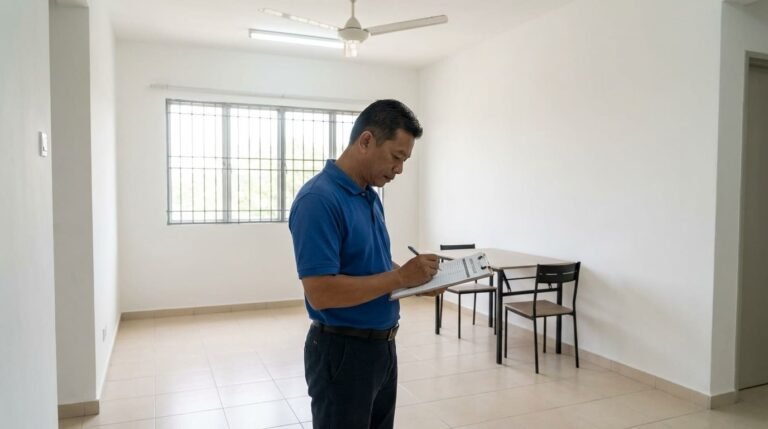
Once the paperwork is sorted, you need to look at the physical condition of your property. Unless your unit is brand new, it will likely need a “refresh” to attract quality tenants.
In Malaysia’s tropical climate, a non-functioning air-conditioner is a dealbreaker, so you should budget around RM150 to RM200 per unit for chemical cleaning. It is also wise to invest in a fresh coat of paint, which can cost anywhere from RM1,000 to RM3,000, as this significantly improves the visual appeal of the space.
Furnishing is another major variable that depends on your target market. You generally have three tiers to choose from. A Bare Unit costs you nothing in furniture but commands the lowest rent.
A Partially Furnished unit—typically including lights, fans, curtains, kitchen cabinets, and air-conditioning—is often the “sweet spot” for family tenants and can cost between RM3,000 and RM8,000 to set up.
Finally, a Fully Furnished unit requires a heavy investment of RM10,000 to RM20,000 or more. While this attracts expats and professionals, it also exposes you to higher wear-and-tear risks.
The Hidden “Holding” Costs
Finally, do not forget the costs that tick away while the unit sits empty. Even during the vacancy period, you are responsible for paying the maintenance fees and sinking fund contributions to your condo management. You also have to cover utility standing charges for Indah Water and electricity. These holding costs can eat into your returns if you take too long to find a tenant or prepare the unit.
How to Save Money You cannot avoid maintenance or furnishing costs if you want good tenants, but you can control your administrative expenses. By using a standard, professional DIY Tenancy Agreement, you bypass legal drafting fees while retaining full control over your terms. For instance, our templates explicitly state that tenants must service air-conditioning units every six months, which helps protect the capital investment you made during the renovation phase.
Ready to rent out your property confidently?
Stop worrying about drafting clauses and start focusing on finding the right tenant.